
Why Your Metabolism Feels Different Now
Oct 16, 2026Hey,
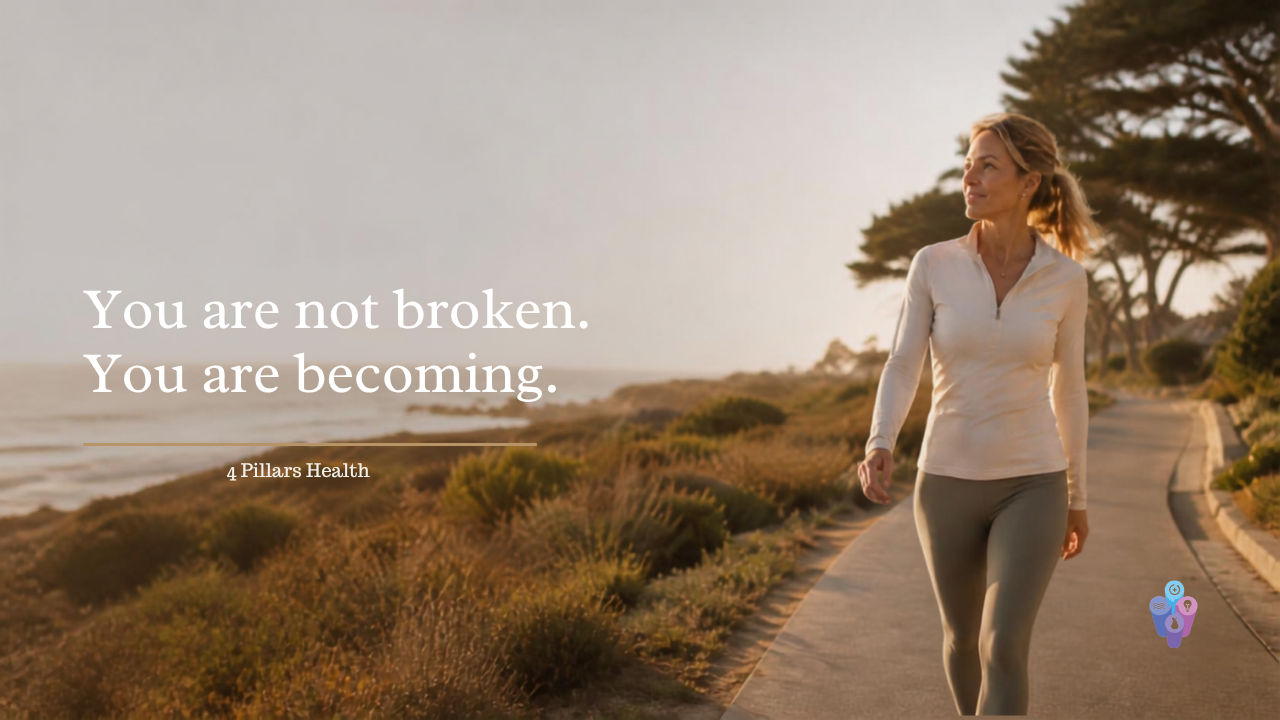
You are not broken. You are becoming.
If you're eating the way you always have and your body is responding differently, hear this first. It's not your imagination. Here's what's actually changing.
What's happening inside
Estrogen does a lot of quiet work behind the scenes. One of its jobs is helping your body handle blood sugar.
After you eat, sugar moves into your blood. Insulin is the key that opens the door so that sugar can get into your cells and become energy.
In perimenopause and menopause, estrogen rises and falls, then settles lower. Your cells start answering insulin a little more slowly. The lock gets stiffer. That's what lower insulin sensitivity means.
So the same plate of food can bring a bigger spike, a harder dip, and more cravings. More of the extra gets stored, often around the middle.
None of that means you failed. It means your body changed the rules a bit. Let's learn the new ones.
Why I wore a glucose monitor when I wasn't diabetic
Back in 2023, curiosity got the best of me. Continuous glucose monitors were everywhere, and the lab girl in me wanted to know what mine could teach me about my own body.
So for three months, I wore one.
People noticed. More than one person asked, "Are you diabetic?" When I said no, they asked why on earth I was wearing it. My answer: so I could learn about my body.
They looked at me like I had eight eyeballs. If you're not sick, what is there to learn?
Turns out, a lot.
That little sensor showed me which foods spiked my glucose, how long the spike lasted, and whether I crashed afterward or landed softly back in range.
The surprises weren't what you'd think. Not pasta. Not dessert. Those aren't really part of my day anyway.
It was a whole apple. A whole sweet potato. Rice.
Good foods! And the good news? Giving them up wasn't the answer. A smaller portion meant my glucose might drift just above range, then settle back down shortly after the meal. Half an apple instead of a whole one. A smaller scoop of rice. Same foods, softer landing.
It's not just food
Here's what surprised me most. Food wasn't the only thing moving my numbers.
A hard workout raised my glucose. That's a normal stress response. Your body releases stored sugar to fuel the effort, and it isn't something to fear.
Stress raised it too.
Think about what that means on a hard day. You're stressed, your glucose is already up, and then you reach for something quick and processed. That's a double whammy.
The answer isn't guilt. It's grace and a little planning:
- Take three slow breaths before you reach for anything.
- Keep a better option within reach. Protein, nuts, berries.
- Step outside for a short walk. Which brings us to this week's small win.
The 10-minute walk
A short walk after meals helps reduce insulin resistance.
When your legs are moving, those muscles pull sugar out of your blood without needing as much insulin. The rise after a meal is gentler, and the dip after it is softer.
- Ten minutes is enough. No workout clothes required.
- Go right after the meal, within about 30 minutes.
- Easy pace. Around the block, the yard, even the house.
- After dinner? Bring someone you love. It doubles as a wind-down.
- Can't get outside? Do 3 to 5 minutes of calf raises, mini squats and marching in place. In one study, simple moves like these helped blood sugar about as much as light walking.
Your small win this week: try a 10-minute walk after your next meal today.
Working with your rhythm
Still cycling? Your nutrition and workouts can shift with your hormones. Lighter foods and more intensity in the first half of your cycle. Complex carbs, magnesium, strength and lower impact in the second half.
Past menopause? There's no cycle to follow, so build your own steady rhythm. Protein at every meal, strength most weeks, and a lighter week when you need one.
You are not broken. You are becoming.
This is information, not a life sentence. You can work with it.
Our bodies are fearfully and wonderfully made, and they're always talking to us. Sometimes we just need a way to listen. A smaller portion, a deep breath, a 10-minute walk. Small choices, made with grace, add up.
Here's to becoming S.U.R.E. ~ Sexy, Unstoppable, Resilient, Energetic.
With gratitude, Jane
Just a reminder: I'm a health coach, not a doctor. This post is for education and encouragement, not medical advice. A walk after meals is not a replacement for any medication. If you're curious about a continuous glucose monitor, or you manage your blood sugar with your doctor, check with your healthcare provider first.
Curious where you land? Take the quiz at 4-pillarshealth.com/quiz ~ or hit reply with your biggest question.
4 Easy Lifestyle Hacks for Better Health!
How to add health to your daily life without adding more to your "to do" list.
Bonus - you will receive periodic updates for optimal mind and body health to help you live your best life.
We hate SPAM. We will never sell your information, for any reason.
